All of us want to feel connected to our better self. That’s when we’re likely to be at our happiest. But inwardly many of us spend much of the time feeling disconnected from our better or best self.
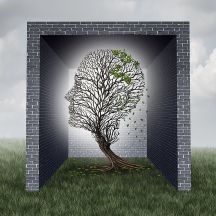
Our state of psychological disconnection is subtle and often unrecognized by us. When people function below their potential, they often have no idea of the nature or extent of this disconnection. This limited conception of self can consist of vague mindlessness, but often it also involves neuroticism, which brings into play negative emotions and sabotaging symptoms such as anxiety, fear, depression, mediocrity, greed, cynicism, stupidity, and fatalism. We impose our neurosis upon the world such that, collectively, a global mass movement is afoot tearing down harmony and rationality.
Americans are pushing disconnection out into the world by erecting tariffs, insulting allies, weakening alliances, and bullying nations. Economically, politically, and socially, we’re also generating more disconnection (and thereby more disharmony) among ourselves. This disconnection from each other can manifest as mockery, condemnation, bitterness, and hatred, all of which have intensified in recent years. This is not just the fault of a few misguided leaders. It’s a mass movement of unconscious ignorance. It stems from the compulsion to act out the inner conflict that remains psychologically unresolved within us.
Reality requires that we feel and practice integrity and some measure of authentic generosity in order to flourish emotionally. Our happiness depends on the quality of our connection to self and to others. If our sense of reality arises from neuroticism’s inner conflict with all its accompanying disconnections, then we’re in danger of being miserable, prone to self-sabotage, and disconnected from our better self.
What does it mean to be disconnected in this way? Psychology has a diagnosis called emotional detachment disorder. Though not a formal diagnosis, it refers to the condition of feeling numb to one’s own and others’ emotions. Experts typically categorize this as a mental-health disorder affecting only a small percentage of the population. I’m suggesting the problem exists at a less intense degree—but more broadly and subtly—as a troublesome limitation of human consciousness.
For example, consider our inaction on climate change. If we had been more connected to our better self, we would have responded vigorously decades ago. We have been largely numb to the dangers of climate change, too overwhelmed by the scope of the problem. We’ve been too weak to take individual responsibility for it.
We couldn’t feel the great hurt we are passing on to future generations. All we could feel, in our shallowness of being, was a sense of helplessness and indifference. Our emotional, psychological, or spiritual connection to our own personal self was too shallow. We were too disconnected to do what we could personally and to insist that our leaders tackle the problem.
Another example of this disconnection involves the sudden rise of artificial intelligence. Why are we considering having machines do the thinking for us? When connected to self, we understand that managing our way forward in this increasingly complicated world requires an evolved, perhaps even sacred, consciousness. Only when disconnected from self would we think of foisting this responsibility on to machines. Only when disconnected would we allow techies and financiers to impose this frenzy of wealth and power-seeking upon us.
There are thousands of examples of how we unconsciously slip into feeling disconnected rather than connected. Much family, community, and social disharmony arises from this compulsion to recycle and replay our disconnection from our better self. A common hurt in marriages is this failure to connect intimately with one’s partner. Often the biggest hurt children feel is an emotional disconnection from one’s parents. It’s not the parents’ fault so much as the effect of our limited consciousness. Both children and adults can be overly sensitive to feeling disconnected because they’re not connecting inwardly with a sense of their own worthiness and goodness.
As another example, romantic relationships are apparently getting more difficult to establish. This story is told in the September, 2026 issue of The Atlantic magazine, under the title “The Great Romance Slump: Why are so few young people finding love?” One cause considered here is the “relationally underdeveloped” state of young men (mostly Gen Z, born between 1997 and 2012.). Many are gamers who still live with their parents. The author writes, “They want connection but, when confronted with women’s expectations, they can feel underequipped and overwhelmed.” Too much time spent gaming and streaming amplify the passive remnants of childhood that all of us must overcome to be at our best. Otherwise, we’ll be disconnected from our birthright, that feeling of inner strength cultivated by our best self.
Consider addictions as another way to see situations through the concept of disconnection. Addictions are symptoms of our weakness in feeling connected to our inner strength and capacity for self-regulation. When we don’t have that connection, we pay a price, and addictions are just one of the many costs of being disconnected from one’s better self. In another example, family estrangement is viewed as a rising trend, but, again, the problem is likely another symptom of the widespread disconnection from self.
I’ve briefly described what it means to feel disconnected and given a few examples of the consequences. Now let’s consider the deep cause of this psychological condition: inner conflict. This conflict, operating often beyond our awareness, puts us at odds with our own self. Inner conflict is nobody’s fault. It arises as a peculiarity of human nature.
Words or terms that refer to inner conflict include inner debate, inner voices, ambivalence, inner struggle, cognitive dissonance, anxious thinking, and indecision. Psychological, emotional, and cognitive disconnections are symptoms of inner conflict.
This conflict is principally an engagement between the self-aggression of the inner critic (superego) and our inner passivity (located in our unconscious, subordinate ego). Our aggressive inner critic and our inner passivity are engaged in compulsive contentiousness, driven as opposites to engage with each other and generate inner conflict. When unaware of this inner condition and its dynamics, we mindlessly become both absorbed in it and victims of it. In assorted ways, we act out this inner conflict in the world.
Inner conflict is a wide-ranging topic. The term appears in the title of one of my books (Our Deadly Flaw: Healing the Inner Conflict that Cripples Us and Subverts Society. Amazon, 2022. 316 pages). Inner conflict often frames our experience of right versus wrong, pleasure vs. displeasure, good vs. bad, strength vs. weakness, self vs. ego, friend vs. enemy, and so on. As I said, our disconnection from self can often be a quiet numbness, but much of the time it is also a love-hate relationship with ourself. It can consist of an exercise in futility, where we struggle in a sense of helplessness to determine what is real and true and whether we are worthy or unworthy. Lacking deeper awareness, we’re often compelled to perpetuate, not resolve, this struggle for truth, meaning, and our place in the world.
We can escape from inner conflict through self-knowledge. Ideally, this knowledge exposes our compulsive acting-out of the dynamics of inner conflict. The depth psychology I practice identifies these dynamics and, with our deepened awareness, their contrariness can be recognized and overcome. (See my 2022 post, “The Emotional Conflict Behind 50 Mental-Health Symptoms”.)
Another form of disconnection involves the world-wide problem of stupidity. Stupidity can arise from inner conflict, meaning one’s intelligence is impaired for psychological rather than biological reasons. While we all want to see and understand the crux of situations, we must also contend, through inner conflict, with childhood inhibitions on seeing into the heart of things. The implication from childhood is that insight can constitute forbidden knowledge. This prohibition is especially rigid in families that practice some variety of fundamentalism. Unconsciously, one’s conflicted psyche becomes the censor of the mind. Insight is instinctively discouraged. Stupidity is a symptom of this rigidity, a product of inner conflict, and a disconnection from one’s better self.
Other factors restricting intelligence are fear, bitterness, cynicism, self-doubt, anxiety, and worry, all of which are symptoms of inner conflict. With unrecognized inner conflict, we’re more likely to be increasingly disconnected from our best self. Passively overwhelmed by the world’s sweeping complexity and rising chaos, we’ll tend to react with compensating, unhealthy aggression in forms such as anger, aggressiveness, hostility, and cruelty. Or we’ll be apathetic, cynical, and fatalistic.
In feeling disconnected, the great danger is that we tend to act it out. Unwittingly, we create situations that make our unconscious disconnection seem true to life. We go into the world this way, generating personal and collective self-sabotage. Obviously, we must do better than that.
